
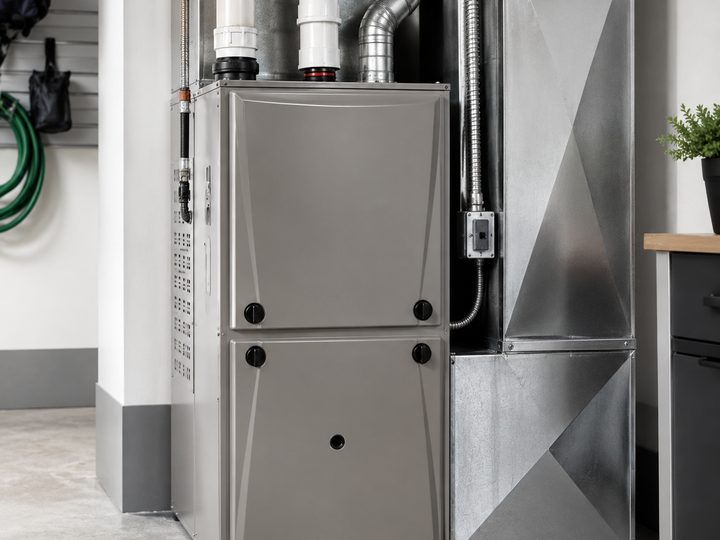
If your gas heat has quit, is short cycling, or is making a noise it did not make last winter, you want a technician at the house today and a straight answer about what it will take. Redeemed HVAC works on gas heating systems in Republic, MO and we operate out of a shop at 10224 W Farm Rd 178, which is in town rather than a dispatch desk in another county.
Tap here to call (417) 241-5687 and schedule a technician at your address today, at a home or a business anywhere in Republic Missouri.
The word gasfitter gets used loosely, so here is the useful version before you spend money. Work on a gas system splits into two halves. One is the gas supply: the meter, the pipe, the line running to an appliance, the shut off valves. The other is the appliance on the end of that line and everything that makes it burn safely, which means the burners, the heat exchanger, the ignition, the gas valve, the flue and the controls.
Redeemed HVAC is an HVAC contractor. Our crew works on the appliance half, which for most homes here means the gas furnace and the rest of the heating system attached to it. If your heater runs on propane from a tank rather than natural gas from the meter, the appliance side is still ours. Everything we provide below is on our profile.
We do not install or reroute gas piping, and we do not offer plumbing services of any kind. We are not a propane company either, so we do not run a delivery route and we do not fill your tank. If the fault turns out to sit in the gas supply rather than in the equipment, we will tell you what we found, shut things down safely, and tell you plainly that your next call is a licensed plumber or gas fitter. Plumbing emergencies are not our trade and pretending otherwise would waste your evening. That is a less impressive sales pitch than claiming to cover everything, and it is the reason people call us back.
Some of these can wait for a scheduled visit. Some cannot. It is worth knowing which is which in your own house.
If you are reading that list because something on it is happening right now, stop reading. Call (417) 241-5687 and describe what the system is doing. We will tell you honestly whether it needs someone tonight or whether it can safely wait for morning.
This is the part of gas heating that is worth being unsentimental about. Carbon monoxide has no colour and no smell, and the early symptoms read like the flu, which is exactly why it is dangerous. The Centers for Disease Control and Prevention reports that more than 400 people in the United States die each year from unintentional carbon monoxide poisoning that is not linked to a fire.2
The U.S. Consumer Product Safety Commission recommends a yearly professional inspection of every fuel-burning heating system in the home, along with the chimneys, flues and vents that carry the exhaust out.3 That inspection covers the electrical and mechanical components, the thermostat controls and the automatic safety switches, and it checks each flue for a blockage, for corrosion and for connections that have worked loose.3 CPSC also recommends every home has at least one carbon monoxide alarm meeting the current UL 2034 standard.3 You can read the CPSC guidance on home heating equipment yourself, and we would rather you did.
That annual check is the cheapest visit we sell and the one we push hardest, because the root cause of most winter emergency calls was visible in October. A corroding heat exchanger, a flue rusted at the joint, a safety switch starting to hesitate: none of those announce themselves until the weather makes you rely on the system.
Book a heating system inspection on (417) 241-5687 before the first cold snap, when we can still get to you the same week.

A repair visit should be a diagnosis, not a guess with a part attached to it. What an expert technician is actually doing on arrival is working from the symptom back to the cause: reading what the control board reports, checking the ignition sequence through from thermostat call to burner light, testing the gas valve and the safety circuit, measuring temperature rise and static pressure, and inspecting the heat exchanger and the flue.
The common failures in the houses around here are not exotic. Flame sensors foul and stop proving the flame. Igniters reach the end of their life and crack. Pressure switches stick when a flue has partially blocked. Limit switches trip because a filter has choked the airflow, so the equipment is doing its job while the house stays cold. Blower motors and capacitors wear out. Control boards fail. A furnace that is short cycling is usually telling you about one of those, and the fix is often modest if it is caught before the system runs itself into something worse.
You get the finding, the options and the price in writing before anyone touches a part. If a fresh filter and a clean flame sensor resolve it, that is the recommendation you will get. If a twenty year old system with a compromised heat exchanger should be condemned rather than patched, you will get that too, with the reasoning, because putting a family back on an unsafe appliance is not a repair.
It is worth considering whether to replace rather than repair when the bill starts approaching a meaningful share of a new system, when parts for your model have become hard to source, when efficiency has dropped far enough that you feel it on the bill every month, or when the heat exchanger has failed. Some homeowners also want something quieter, or something more environmentally friendly than the equipment it is replacing. It is the right moment to fix the sizing mistake that came with the house, too.
Proper installation is measured work. The load gets calculated for the actual building rather than copied off the label on the old unit, because oversized equipment short cycles, wears itself out early and heats the house unevenly. The ductwork gets checked to confirm it can carry what the new equipment produces, since a properly sized system on undersized ducts wastes most of what you just bought. Venting, combustion air and condensate drainage get done to code, and the system is commissioned and measured rather than switched on and left. Then we show you the readings.
If you are replacing heating equipment anyway, it is usually the cheapest moment to deal with the cooling side of the same system before summer, because the two share the blower, the ductwork and the labour of getting into the space.
CPSC puts annual professional maintenance on the list of things a homeowner should not skip, and for gas equipment the safety argument sits alongside the running cost argument.3 A maintenance visit here means cleaning and inspecting the burners, testing the ignition and the safety circuit, inspecting the heat exchanger and the flue, checking gas pressure and combustion, testing the blower and the capacitor, checking the thermostat calibration, and replacing or cleaning the filter that quietly causes a third of the callouts we see.
We also check the condensate drain while the cabinet is open, because a clog there will shut a modern system down as fast as an electrical fault will, and it costs nothing to catch. Keeping equipment dependable is mostly a matter of small things done on time, which is the whole argument for booking a visit to maintain the system every year instead of meeting us in an emergency.
Book it in autumn. Every heating contractor in the Springfield area is at capacity the first week the temperature drops, and the customer who scheduled maintenance in September is the one who is warm in December. The same logic runs in reverse in spring, which is why a cooling tune up before the first hot week is the other cheap visit worth calendaring.
Heat that never leaves the hallway is not a furnace problem. A crushed run, a disconnected boot above a ceiling, a vent painted shut by a previous owner, or a return that was never sized for the extension: any of those will have you convinced the equipment is failing when the equipment is fine. That is why duct and vent cleaning, repair and installation sit on the same profile as the heating work, and why a technician who is already in the crawl space will tell you what they saw down there.
Commercial buildings are a harder version of the same problem. Vent runs above a kitchen or a workshop collect grease and dust far faster than any house does, and that build up chokes airflow long before anyone connects it to the heating complaint. If you run a business in town, get it looked at while the weather is mild.
No mystery and no upsell theatre:
Any heating provider you call should inspect before it quotes, and you are entitled to see what it found. That applies to us as much as to anyone else, and it is a fair thing to ask on the phone before you book.

Republic sits in Greene County, inside the Springfield metropolitan area, between the Interstate 44 and U.S. 60 corridors, with Springfield-Branson National Airport about fourteen minutes away.4 That geography in southwest Missouri is the whole reason we can usually reach an address in town quickly.
Our shop on West Farm Road 178 sits on the same farm road grid as Wilson’s Creek National Battlefield, whose physical address is 6424 W. Farm Road 182, Republic, MO 65738.5 If you can find the battlefield, you are a few minutes from us, and the map at the foot of this page will drop you at the door.
We cover the whole of 65738: the newer subdivisions off Highway MM, the older housing stock around the downtown grid, the properties out along the farm roads toward Wilson’s Creek, and homes on the east side of town toward Brookline. The building stock matters here. The town has grown quickly, so there are houses only a few years old where the system was never commissioned properly, sitting alongside homes with equipment old enough that replacement is the safe recommendation. Those are very different conversations, which is why we look before we quote. For everything else the crew covers locally, see every heating and cooling service we run for Republic addresses, or read more on furnace and heat pump work through the coldest weeks of winter.
A failed air conditioner in August is miserable. A failed gas heating system in January is a different category of problem, especially in a house with young children, elderly relatives or pipes on an outside wall. That is why 24 hour service is on our profile and on the Chamber listing, and why a call at eleven at night reaches a human.1
If you have no heat, if you smell gas, or if a carbon monoxide alarm has gone off, act on it now. Get out first if there is any question of gas or CO, then call (417) 241-5687 from somewhere safe.
Our reviews live on the Google Business Profile rather than being retyped here, so you can read the real ones with the dates attached and judge for yourself. Read every current customer review on our Google profile before you call anyone, including us.
It moves week to week, so any number printed on a contractor website is out of date by the time you read it. The U.S. Energy Information Administration publishes the Missouri residential propane price as a weekly series through the heating season, roughly October to March, and that is the figure to trust. Check the EIA weekly Missouri propane and heating oil prices directly.6 We have nothing to gain from the number either way, because we are not a propane company and we do not sell you the fuel.
Two different things share a word here. Gasoline prices at the pump in Republic change daily and are best checked on a live fuel price app. Natural gas and propane for heating a home are a separate market, tracked by the EIA series above.6 If you are working out what it costs to heat your house this winter, the fuel price is only half of it. The other half is how efficiently your equipment burns it, and that half we can do something about.
The authoritative figure is the U.S. Census Bureau QuickFacts profile for Republic city, Missouri, updated as new American Community Survey estimates are released. We will not publish a social statistic on a heating page and let it go stale, so check QuickFacts for the current number. What we can tell you is that a repair bill lands differently in different households, which is why the price is agreed before the work starts.
That is a judgment call rather than a fact, but the numbers lean one way. Republic recorded 18,750 residents at the 2020 census, sits in Greene County inside the Springfield metro, and has the airport about fourteen minutes away.4 Towns people are leaving do not build subdivisions. From our side of it, that growth means a lot of new construction alongside older homes whose heating systems are reaching the end of their service life, which is most of what keeps the crew busy here.
Stop guessing about the furnace and get someone in front of it who can tell you what is actually wrong and what it costs.
Call (417) 241-5687 to book gas heating service in Republic today.
with Redeemed HVAC & Plumbing
Enjoy annual tune-ups and peace-of-mind knowing your home will be comfortable all year round. No matter the weather.
We provide full service of all makes and models of heating systems including furnaces, heat pumps, packaged units, and ductless mini-splits.
Providing full service for all makes and models of A/C systems including air conditioners, heat pumps, and ductless mini-splits.