
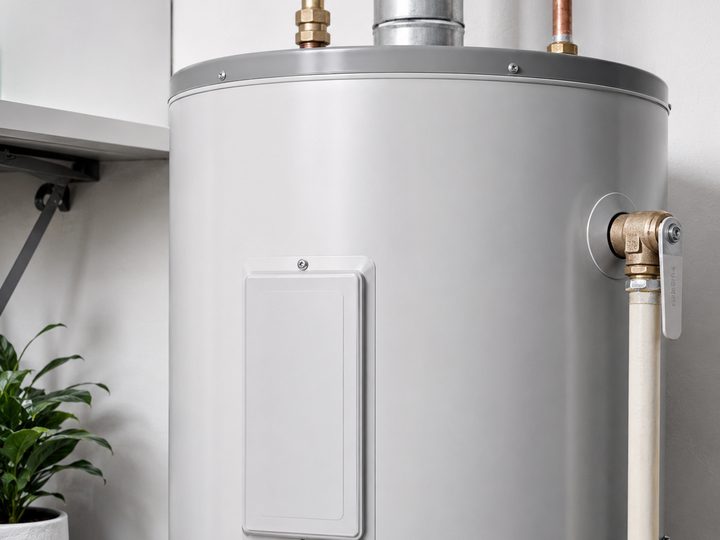
When the hot water quits, everything in the house slows down. Showers, dishes and laundry all wait on one appliance, and a water heater rarely picks a convenient day to fail. The good news is that many water heater problems are repairs, not replacements, once you know what you are looking at.
No hot water from a gas water heater usually points to the pilot, thermocouple or gas valve. On an electric unit it is usually a tripped breaker, a failed heating element or a bad thermostat. Hot water that runs out fast often means sediment or a broken dip tube. Water leaking from the bottom of the tank almost always means the tank has failed and needs replacing. We diagnose first and give you the price before any work starts.
Three questions settle most water heater decisions in Nixa homes.
If replacement makes sense, a new water heater is also a chance to get the size right, which ends the problem of running out of hot water for good.
| What is happening | Most likely cause |
|---|---|
| No hot water, gas unit | The pilot is out, a thermocouple or flame sensor has failed, or the gas valve has a problem |
| No hot water, electric unit | A tripped breaker, a failed heating element or a bad thermostat |
| Hot water runs out fast | Sediment filling the tank, a broken dip tube or a failed lower element |
| Rumbling or popping sounds | A layer of sediment on the bottom of the tank overheating |
| Rusty or smelly hot water | A worn-out anode rod, or corrosion inside the tank |
| Water around the top | A loose fitting or a leaking supply connection |
| Water from the bottom of the tank | Tank failure |
| Relief valve dripping | Too much pressure or temperature in the tank, or a failing valve |
Much of the water in southwest Missouri is hard, carrying dissolved minerals from the limestone underground. When that water heats up, some of those minerals settle out and collect on the bottom of the tank.
That sediment layer does real damage over time. It insulates the water from the burner on a gas unit, so the heater runs longer to do the same job, and it can bury the lower element on an electric unit. It is also the source of the rumbling and popping many homeowners hear.
Regular maintenance keeps it in check. Flushing the tank clears loose sediment, and checking the anode rod catches corrosion before it reaches the tank wall. Tankless water heaters handle hard water differently: they need periodic descaling to keep minerals from building up inside the heat exchanger.
A traditional tank water heater costs less to buy and install, and it stores a ready supply of hot water. Once that supply is used, you wait for the tank to recover.
A tankless unit heats water on demand, so it does not run out the same way, and it takes up far less space. It usually costs more up front, and it may need a larger gas line, new venting or more electrical capacity depending on the model. For homes that already have one, our tankless water heater repair service covers descaling, error codes and flow problems.
Every tank water heater has a temperature and pressure relief valve. Its job is to open if the tank gets dangerously hot or pressurized. A valve that drips now and then is telling you something is wrong. A valve that has been capped or plugged is a serious hazard and should never be left that way.
Federal energy and safety guidance generally recommends setting a water heater around 120 degrees. That setting lowers the risk of scalding and cuts standby energy loss. Gas water heaters also need proper venting, so a working carbon monoxide alarm near the utility area is a smart addition.
A leaking tank can release a lot of water quickly. The EPA’s guide to mold and moisture recommends drying water-damaged areas within 24 to 48 hours, so do not wait on a puddle next to the heater.
A water heater is tied into the whole plumbing system, so plumbing issues in one place often show up in the other.
If the leak turns out to be somewhere other than the water heater, our leak repair service tracks it down.
It is usually time to replace your water heater when the tank is leaking, when an aging unit needs a major part, or when repairs keep coming back. If the tank is leaking now, call us right away and shut off the water supply to the heater.
A replacement is also a chance to upgrade. A higher efficiency tank, a tankless water heater or a unit sized properly for your household can bring energy bills down, because an older unit that is scaled up with sediment works harder than it should. During the visit, a technician can do an inspection of the water supply connections, the venting and the relief valve so the new unit starts out right.
Routine maintenance protects the new water heater once it is in. Flushing the tank and checking the anode rod on a schedule helps it last. Because we are an HVAC and plumbing company, that maintenance can happen on the same visit as a heating and cooling tune-up. Contact us today at (417) 356-4048 to set it up.
Catching these signs early can extend the life of your water heater and head off costly repairs. A tankless system has its own warnings, such as error codes or water that swings between hot and cold. Our water heater service covers tank and tankless units along with the water lines connected to them, as part of our plumbing services in Nixa. We are fully licensed, offer same-day service on most calls and handle emergency plumbing when a tank fails. If you notice any of these signs, give us a call.
Leaks at the top usually come from fittings or connections and can often be repaired. A leak from the bottom of the tank usually means the tank has failed.
It depends on how much hot water your household uses at its busiest time of day. A tank’s first-hour rating, printed on its label, is a better guide than tank size alone.
That smell usually comes from a reaction between bacteria in the water and the anode rod. Replacing the anode rod and flushing the tank often solves it.
For many households, yes, especially where hot water runs out often or space is tight. The installation cost and your gas or electrical setup decide whether it pays off in your home.
Water heater repair and installation are part of the plumbing service in Nixa we provide for homes and businesses, including tankless water heaters, leak repair, drain cleaning and fixture work. Our plumbers in Nixa agree the price before any work begins. Call (417) 356-4048 any time, 24 hours a day, 7 days a week.
24 hour service from a team based in Nixa, not driving in from somewhere else.
(417) 356-4048
Open 24 hours, 7 days a week, including holidays.
Two tune-ups a year on every system you own, 10% off all repairs and priority scheduling, from $14 a month.
Approved financing spreads the cost of a replacement, so the timing of the work is your decision rather than the equipment’s.
A plumbing problem leaves you guessing at both the cause and the bill, and most people find out the price only after the work is done. We find the cause, show you what we found, and agree the cost with you before anything is touched. Call (417) 356-4048 or book online.