
(417) 241-5687 24/7 Emergency Service
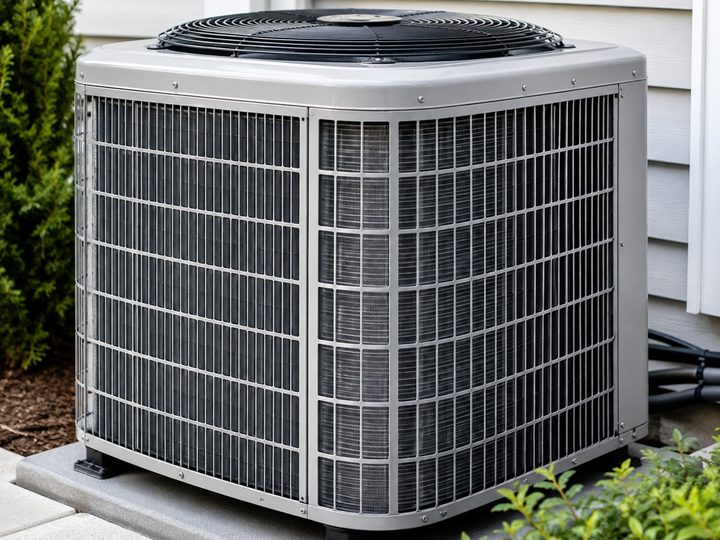
On the east side of Springfield the hardest heating and cooling problems are not in the equipment. They are in the building.
Much of this part of town went up in the 1910s and 1920s. Rountree alone, bounded by Missouri State University to the west, Glenstone Avenue to the east, Catalpa Street to the south and Cherry Street to the north, is largely Craftsman, Foursquare and Federalist homes from that stretch. They were built beautifully and they were built for a heating method that no longer exists in most of them.
Redeemed HVAC & Plumbing provides HVAC services across east Springfield: air conditioning repair, furnace and heat pump work, installation, HVAC maintenance, ductless systems, thermostats, indoor air quality and 24 hour emergency service. Call (417) 241-5687.
Yes. A house built in the 1910s or 1920s can run central air conditioning, and plenty of them on the east side already do. What it cannot do is accept a duct system the way a house built in 1995 accepts one, because there is no interior cavity anyone intended to run air through. Solid plaster on lath, full-dimension framing and ten foot ceilings leave very little hidden space, so the duct route has to be invented. That is the real decision, not the brand of equipment. There are three honest routes, and each one trades something different: a retrofit duct system trades closet and ceiling space, a ducted system with zoning trades up-front complexity for room-by-room control, and ductless heads trade a visible indoor unit for reaching rooms no duct can serve properly.
Ask anyone in a 1920s two story on this side of town what is wrong with their air conditioning and they will describe the same thing. Downstairs is fine. Upstairs is not.
Two parts of the building cause that, and neither is the equipment.
The first is stratification. Warm air is less dense, so it collects at the top of a room, and in a house with ten foot ceilings there is a lot of room at the top. The thermostat reads the air at chest height on the main floor, which is the coolest, best-mixed air in the house. It reports satisfaction while the second floor is still several degrees above it. The system did what it was told. It was told by the wrong place.
The second is balloon framing. In houses from that era the wall studs often run continuously from the sill to the roof rather than stopping at each floor, which leaves a vertical channel inside the walls connecting the basement to the attic. Heat and moisture travel that channel. A modern platform-framed house has a plate at every floor interrupting it. These houses do not, which is why heat that enters the attic in the afternoon shows up on the second floor in the evening without ever coming through a vent.
A larger condenser does nothing about either one. Zoning, a second thermostat, return air at the top of the stairs, attic air sealing and attic insulation all do.
Here is the mechanism most equipment conversations skip.
Plaster on wood lath is heavy. Heavy materials store heat, then release it slowly. Drywall, by comparison, is thin and gives up its heat quickly. So a plaster house behaves differently from a modern one in both directions: it resists the morning heat better and it keeps radiating the afternoon’s heat long into the evening.
That lag is why a Rountree house can feel worst at nine at night rather than at four in the afternoon, and why the air conditioning seems to be losing a fight it was winning earlier. The system is not failing. It is removing heat the walls stored hours ago, while also handling whatever is still coming in through the windows and the attic.
Practically, that changes what helps. Setback schedules that work in a lightweight house work poorly here, because a plaster house takes far longer to recover once it has been allowed to warm up. Steady, longer run times suit these buildings better than deep swings, and longer run times are also what dehumidifies.
Cooling does two separate jobs: it lowers the temperature of the air and it takes water out of it. The trade calls the first sensible cooling and the second latent cooling.
An oversized system satisfies the thermostat quickly and shuts off, which sounds efficient and is not. Moisture removal is not instant. The indoor coil has to stay cold long enough for water to condense on it and drain away, and a system that finishes in a few minutes cools the air while leaving most of the water in it. The house sits at exactly the number on the thermostat and still feels wrong, so somebody lowers the setpoint, which buys a little more run time, costs more energy, and never addresses the actual complaint.
In a tall-ceilinged, plaster-walled house with a vertical path through the walls, there is more moisture in play than the thermostat will ever report. That is the single strongest argument against sizing a replacement by copying the old nameplate.
Equipment size is the result of a calculation about this specific house. The residential standard is ACCA Manual J, which works room by room, with Manual S selecting the equipment against that answer and Manual D sizing the duct that has to deliver it.
One ton of cooling equals 12,000 BTU per hour. Whether your house needs three tons or two and a half depends on window area and which direction those windows face, ceiling height, insulation levels as they are today, air leakage, internal heat from cooking and laundry, and whether any duct runs through an unconditioned attic.
That last input matters more here than almost anywhere, because in a house with no original duct chase the ducts frequently ended up in the attic, which is the hottest part of the building. A duct gaining heat in a 130 degree attic delivers warmer air than the equipment produced, and no efficiency rating on the condenser compensates for it.
Efficiency ratings themselves changed on 1 January 2023, when SEER2 and HSPF2 replaced SEER and HSPF under a US Department of Energy test procedure change. The new procedure tests against a higher external static pressure, closer to what real installed ductwork imposes. It is a useful reminder that the rating describes the equipment under test conditions, not your attic.
The service area runs across the east side of the city, from Rountree and the streets around Missouri State out along East Sunshine Street and the Glenstone Avenue corridor, down past Bradford Park and across to Sequiota Park. Work in the rest of the city is covered on the main Springfield heating and cooling services page.
Most HVAC failures can wait for morning. Three cannot.
A carbon monoxide alarm or a gas smell is not a comfort problem. Carbon monoxide is colorless and odorless, so there is nothing to smell and nothing to confirm by waiting it out. Get everyone outside and call from outside. In older homes this matters more than average, because original chimneys were built for appliances that no longer exist and venting arrangements have often been changed more than once.
Water is the second. A frozen indoor coil thawing above a plaster ceiling does damage that costs far more than the repair underneath it. Shut the system off at the thermostat and let it drain.
The third is any no-heat night with an infant, an older adult or anyone unwell in the house. Call it in rather than waiting to see. Emergency service runs 24 hours on (417) 241-5687.
Will a bigger air conditioner finally cool my second floor?
No, and it usually makes the humidity worse. The second floor is a distribution and stratification problem. Zoning, return air at the top of the stairs, and attic sealing address it. More tons do not.
Can I keep my radiators and add air conditioning?
Yes. A high-velocity retrofit duct system or ductless heads will cool a house without disturbing an existing hydronic heating system, and plenty of owners prefer keeping the radiators.
Are ductless systems ugly?
That is a fair objection and it is the real trade-off. Modern heads are slim, and in a room where the alternative is no proper conditioning at all, most owners decide the wall unit wins. Ceiling cassettes and floor-mounted units are options in some rooms.
Why does my house feel worse in the evening than in the afternoon?
Thermal mass. Plaster walls release stored heat for hours after the outdoor temperature drops, so the system is still removing this afternoon’s heat at nine at night.
How do I confirm an HVAC contractor is licensed here?
Missouri does not license HVAC contractors at state level. Cities and counties do, so ask which municipal license a company holds and confirm it covers the address being worked on. There is no single statewide registry.
Is a ductless mini split noisy indoors?
Far less than most people expect. The compressor is outside, and the indoor head runs quietly enough that the usual objection turns out to be how it looks rather than how it sounds.
Do you handle commercial HVAC on this side of town?
Yes. Commercial HVAC and commercial repair are both covered, which matters in the mixed residential and commercial blocks along the main corridors.
Can one visit cover heating, cooling and plumbing?
Usually, and it is worth asking for. The same team handles the heating system, the air conditioning, the ductwork and the plumbing. Call (417) 241-5687.
An older house is not a harder house to get right. It is a house where the answer is more often in the ducts, the attic and the thermostat location than in the equipment, and where a quote written without a load calculation is a guess with a price on it.
Redeemed HVAC & Plumbing is a Rheem Pro Partner, offers maintenance agreements and financing, and runs emergency service 24 hours. Call (417) 241-5687 for repair, a tune-up, or a straight assessment of what your house can actually support.
Heating, cooling and plumbing sit on the same service call in a lot of Springfield homes. These are the related pages a homeowner reading this one usually wants next.
Redeemed HVAC & Plumbing is an HVAC contractor serving Springfield, covering heating and cooling, air duct cleaning and plumbing. Residential and commercial HVAC work both run out of the same team, so a technician on site for an air conditioning repair can also look at the heating system, the ductwork, the thermostat and indoor air quality.
Emergency HVAC service runs 24 hours. Call (417) 241-5687.
The east side service area runs from the streets around Missouri State out along the Glenstone Avenue corridor and East Sunshine Street, down past Bradford Park toward Sequiota Park. Residential and commercial HVAC work both come from the same team.
Older housing on this side of the city changes what the right answer usually is. More of these jobs end in a ductless mini split, a zoning change or an attic air sealing recommendation than in a larger condenser, and that is a function of the buildings rather than a preference.
For HVAC services in east Springfield, call (417) 241-5687.
(417) 241-5687
Open 24 hours, 7 days a week, including holidays.
Two tune-ups a year on every system you own, 10% off all repairs and priority scheduling, from $14 a month.
Approved financing spreads the cost of a replacement, so the timing of the work is your decision rather than the equipment’s.
A heating or cooling problem leaves you guessing at both the cause and the price. The diagnosis comes with the readings behind it and the quote comes in writing, itemized, before any work starts. Call (417) 241-5687.