
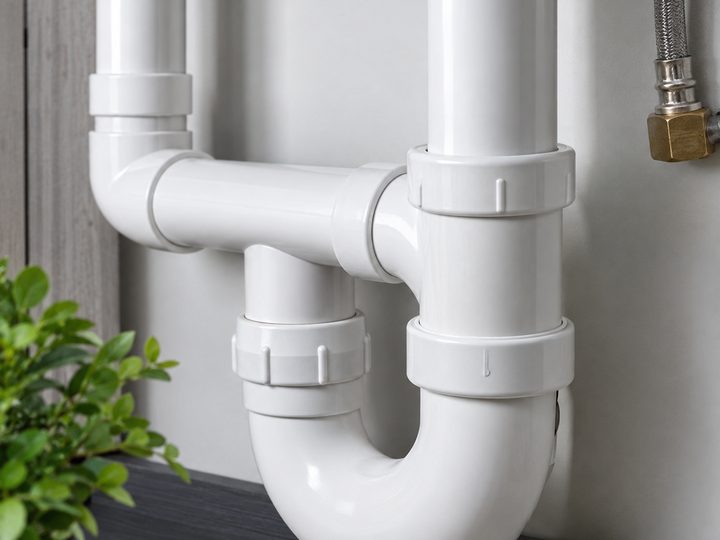
When a pipe lets go, two separate problems start at the same time. There is a plumbing problem, which is the thing that broke. And there is a water problem, which is everything the water touches while it keeps running.
The plumbing problem costs what it costs. The water problem grows by the minute, and it is the one you can actually control before anyone arrives.
That is why this page starts with your shutoff valves rather than with a phone number. Knowing where they are, on a calm evening, is worth more than anything else you will read here. The number is (417) 356-4048 and emergency plumbing service runs 24 hours.
A plumbing emergency is water you cannot stop, waste coming back into the house, or no water at all. That is the honest short list. Water escaping from a burst pipe, a failed supply line, a water heater or a fitting is an emergency because the damage compounds while you wait. Sewage backing up at a floor drain or a basement fixture is an emergency because it affects the whole building rather than one fixture, and because of what is in it. A total loss of water is an emergency for a household that needs it. Beyond those, most plumbing problems are urgent rather than emergencies: a single slow drain, one dripping faucet, a running toilet. Those cost money by the day, not by the minute, and they are cheaper to fix on a scheduled visit than at two in the morning.
Call now, and shut the water off first:
Book a visit, it can wait for morning:
This is the part worth doing tonight, and it takes about ten minutes.
There are three levels of shutoff in most Nixa homes, and knowing which one to reach for is what turns a flood into a puddle.
Two things worth checking while you are down there. Does the main valve actually turn, or has it seized in place from never being used? A valve that has not moved in fifteen years is a valve that may not seal when it finally matters, and replacing it on a Tuesday is an ordinary job. And is the path to it clear, or is it behind storage you would have to move in the dark?
There is also a curb stop at the property line, operated with a key rather than by hand. That one belongs to the utility, and it is the fallback when the main valve inside has failed.
By what is actually happening.
A burst or leaking pipe. Shut the water off at the nearest level that works, fixture first, main if you are not sure. Open a low faucet, a basement sink or an outside tap, to drain the pressure out of the system. That stops the water already in the pipes from continuing to find the hole. Then move what you can out of the way and call.
A leaking water heater. Close the cold inlet valve on top of the tank. Switch the heater off, at the breaker for an electric unit or at the gas control for a gas one. Do not try to drain it while it is hot.
A sewer backup. Stop running water anywhere in the house, including the washing machine and the dishwasher. Every gallon you send down has to go somewhere, and with the main blocked that somewhere is the lowest opening indoors. Keep people and pets away from it.
Water near electrics. Do not wade in to investigate. If you can reach the breaker panel safely and dry, cut the power to that area. If you cannot, leave it and say so when you call.
Any smell of gas. Leave the building first. Do not operate light switches or anything else electrical on the way out, and do not use a phone inside. Call from outside.
Here is the mechanism that explains why acting fast matters more in plumbing than in almost any other trade.
The repair to the pipe is usually the small part of the day. What costs is where the water went. Water moves along the path of least resistance, which means it travels sideways across subfloor and along joists, often a long way from the leak, before it shows up as a stain on a ceiling. By the time it is visible downstairs it has already been in the structure for a while.
Drywall and insulation hold it. Insulation that has been wet stops insulating and does not recover by drying alone. Subfloor swells. And in a closed cavity with no airflow, the conditions for mold are present within a couple of days, which turns a plumbing repair into a remediation job.
None of that is an argument for panic. It is an argument for knowing where the main valve is, because the difference between shutting it off in two minutes and finding it in twenty is most of the damage.
Nobody can give you a real number over the phone, because the price is set by what the fault turns out to be and where it is. What can be explained is the structure of the bill, which is what lets you compare companies honestly.
There is a diagnostic component covering the visit and the time to find the fault. There are parts. There is labor to fit them. And after-hours work is priced differently from scheduled daytime work, as it is in every trade, because it means staffing a rota outside normal hours.
Three questions worth asking when you call, not after:
And one to ask yourself honestly: is this actually an emergency, or is it a repair that is going to feel expensive at midnight and ordinary at nine in the morning? A slow drain is the second kind.
This surprises people and it takes two minutes to check.
Missouri does not license plumbers at the state level. Licensing sits with individual cities and counties. A company holding a valid license in one municipality may hold nothing at all in the town where your house actually sits, and there is no single statewide registry to check anyone against.
So the useful question is not whether a plumber is licensed in the abstract. It is which municipal license they hold, and whether it covers the address where the work is happening. That is a fair question to ask any company, including this one, and the answer should be specific rather than reassuring.
Worth knowing because it explains why certain emergencies repeat.
Groundwater across this part of Missouri moves through limestone and dolomite, which dissolves calcium and magnesium into it. That is hard water, and it is geology rather than anything a utility is doing wrong.
Inside a tank water heater those minerals settle at the bottom, where the burner or the lower element is. The layer insulates, so the heater works harder for the same hot water and the steel runs hotter than designed. The rumbling people describe is water boiling under that sediment bed. It is also why a water heater here can fail earlier than its age suggests, and why a tank that has never been flushed is a more likely emergency than one that has.
The same minerals shorten the life of fill valves, cartridges and supply lines. Water treatment addresses the cause rather than the symptom, and it protects fixtures and appliances at the same time.
Will you come out at night for a blocked drain?
Emergency service runs 24 hours, so yes. But if one fixture is slow and the rest of the house is fine, you will pay after-hours rates for something that would cost less in the morning and will not get worse overnight. That is worth saying plainly.
Everything backed up at once. Can I still use the upstairs bathroom?
No. Stop running water anywhere in the house. Two or more fixtures backing up together means the main line, and anything you send down adds to what has to come back up somewhere.
My water heater is leaking. Is that an emergency?
It depends where from. Water at the fittings or the relief valve is a repair. Water weeping from the body of the tank is the end of that tank and it will not improve, so shut the inlet and call.
What if I cannot find the main shutoff?
Say so when you call, and shut off whatever you can reach in the meantime. It is also the first thing to locate once the emergency is over.
Do you handle heating and cooling too?
Yes, the same team covers the HVAC side. A burst pipe in a cold snap and a furnace that quit are often the same night, and they do not need two companies.
If water is moving right now, shut it off and call. If it is a slow drain, book it for the morning and spend the evening finding your main valve instead.
Redeemed HVAC & Plumbing covers emergency plumbing repairs across Nixa, including burst pipes, leaks, water heaters, drain and sewer backups, and fixtures. Emergency service runs 24 hours on (417) 356-4048. Broader plumbing work is on the Nixa plumbers page.
(417) 356-4048
Open 24 hours, 7 days a week, including holidays.
Two tune-ups a year on every system you own, 10% off all repairs and priority scheduling, from $14 a month.
Approved financing spreads the cost of a replacement, so the timing of the work is your decision rather than the equipment’s.
A plumbing problem leaves you guessing at both the cause and the price. The diagnosis comes with the readings behind it and the quote comes in writing, itemized, before any work starts. Call (417) 356-4048.