(417) 241-5687 24/7 Emergency Service
Most HVAC pages that mention commercial work are describing house calls with a larger invoice. The actual differences are not about size.
They are about where the equipment lives, when you are allowed to touch it, who complains when it is wrong, and what an hour of downtime costs. Those four things decide how commercial work gets scheduled, quoted and done, and none of them exist in a house.
If you run a building in Springfield, that is the part worth reading.
For commercial HVAC in Springfield call (417) 241-5687.
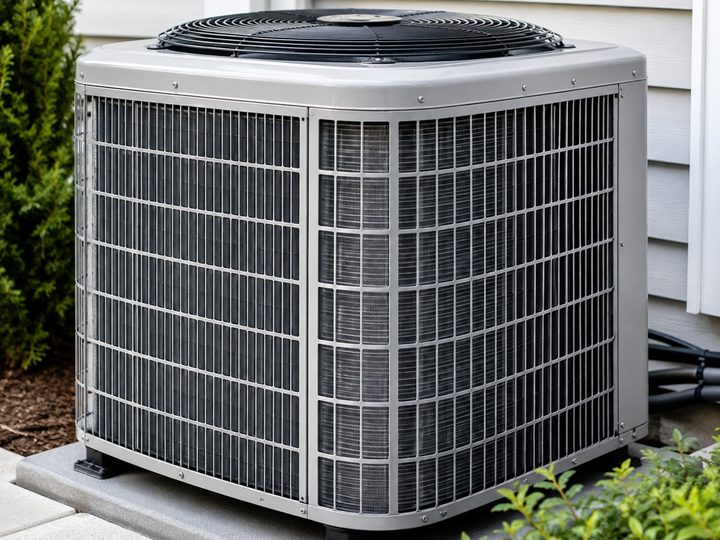
Most commercial buildings here are served by packaged rooftop units. One cabinet on the roof holds the compressor, the coils, the blower and the gas heat, with the conditioned air dropped straight down through a curb into the ceiling space.
That arrangement has consequences a split system does not:
That last point is the real argument for scheduled maintenance services on commercial equipment. The feedback loop that protects residential systems does not exist here.
A house is available all day. A restaurant is not available at noon, a dental office is not available mid-procedure, and a warehouse running two shifts has a narrow window at best.
So commercial work gets planned around the business rather than the technician. Diagnostics can often happen during hours. The disruptive parts, a compressor change, a unit swap, duct modifications, usually happen at night or on a weekend.
That is also why the quote should say when the work happens. Two commercial quotes with the same scope and different numbers are frequently the same job at different hours of the day. It is a fair question to ask directly.
Our profiles are open 24 hours, which on the commercial side matters more than it sounds. A rooftop unit failing at 4am on a Saturday in a building full of refrigeration is not something that waits until Monday.
In a house, the person who is cold adjusts the thermostat. In a commercial building, the person who is cold tells someone else, and you get the complaint instead of the data.
Most of those complaints are not equipment faults. They are zoning and air balance:
Those are design and balance findings, and they come out of measurement rather than a new air conditioner. Replacing equipment to solve a zoning problem is the most expensive way to not fix it.
This is the calculation that separates a commercial decision from a residential one.
In a house, a failed air conditioner is uncomfortable. In a business it can close the doors, spoil stock, or send staff home. So the right comparison is never just repair against replacement. It is the cost of the repair against the cost of being down again, times how likely that is.
That changes the answers in ways residential logic gets wrong:
A quote that only compares part cost to unit cost has left out the number your business actually runs on.
The readings are the same discipline as residential work, taken per unit and recorded per unit, because a building with six rooftop units has six different machines aging at six different rates.
The economizer is worth singling out. It is the damper arrangement that brings in outside air when outside air is already the right temperature, which is free cooling for a good part of spring and fall in Missouri. When the linkage seizes or the actuator dies, nothing breaks and nothing alarms. You simply pay for mechanical cooling you did not need, for years.
Named plainly, because facilities people want to know what is in scope before they call.
An HVAC contractor on a commercial building should be able to tell you which unit serves which space without looking it up twice. That map is the first thing we build, and the HVAC maintenance record hangs off it.
What is the difference between commercial and residential HVAC in Springfield?
Equipment type, access, scheduling and consequence. Commercial buildings mostly run packaged rooftop units rather than a split system, so the whole machine sits in weather and needs roof access to service. Work has to fit around the business, often at night or on a weekend. Complaints come from occupants who do not control the thermostat, so zoning and air balance cause more of them than equipment faults. And a failure costs trading, not just comfort, which changes whether repair or replacement is the right call.
How often should commercial HVAC be serviced?
Quarterly is the usual interval, with the heating section checked before winter and the cooling section before summer. The reason is not efficiency, it is that nobody notices a rooftop unit degrading. A home system tells its owner it is struggling. A unit on a roof runs badly in silence until a space goes uncomfortable, and by then the damage is usually done.
Can one rooftop unit heat and cool a whole building?
Only if the spaces it serves have similar loads. A unit serving both a sunlit room full of people and an interior storeroom cannot satisfy either, because one thermostat is deciding for both. That is a zoning problem, and the fix is zoning or rebalancing rather than a bigger air conditioner. Replacing equipment to solve it is expensive and does not work.
Should I repair or replace a commercial rooftop unit?
Weigh the repair against the cost of being down again, not just against the price of a new unit. A repair on a unit you plan to replace next year is often the right move, because it lets you schedule the replacement in your quiet season with the crane and the roofing work booked, instead of reacting the week it fails. Where the unit is well past its life and the failures are stacking up, planned replacement wins.
Do you handle commercial furnace installation and air conditioning repair on the same visit?
On packaged rooftop equipment the heating and cooling are in one cabinet, so yes, they are the same machine and the same visit. On split or multi-unit systems it depends on access and the window the building allows. Either way the scope and the hours should be written down before the work starts.
What is an economizer and why does it matter?
It is the damper arrangement that pulls in outside air when outside air is already cool enough to condition the space, which gives you free cooling through much of spring and fall. When the actuator or linkage fails, nothing alarms and nothing breaks. The unit just runs mechanical cooling it did not need. It is one of the most common faults found on commercial equipment and one of the least noticed.
A commercial HVAC quote should name the units by location, carry the readings taken on each, say when the work happens and who handles roof access and any curb or roofing work. That is the version you can compare and hold someone to.
Call (417) 241-5687. For the residential side, see our heating and cooling work across the city.
(417) 241-5687
Open 24 hours, 7 days a week, including holidays.
Two tune-ups a year on every system you own, 10% off all repairs and priority scheduling, from $14 a month.
Approved financing spreads the cost of a replacement, so the timing of the work is your decision rather than the equipment’s.
A heating or cooling problem leaves you guessing at both the cause and the price. The diagnosis comes with the readings behind it and the quote comes in writing, itemized, before any work starts. Call (417) 241-5687.