Most people buy a tune-up expecting a cleaning. The cleaning is the least valuable part of the visit.
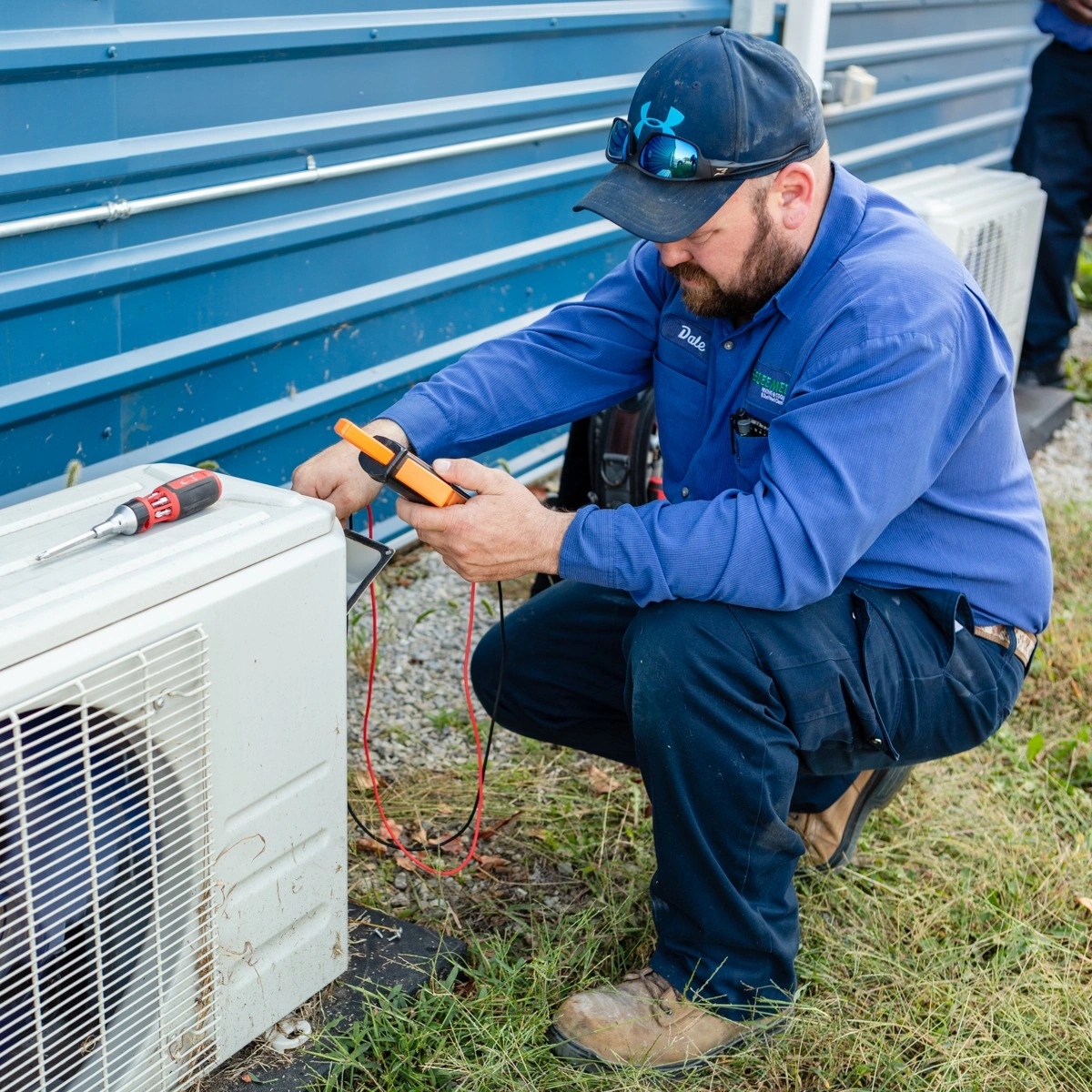
What makes maintenance worth paying for is measurement. A technician who writes down static pressure, temperature split, amp draw and refrigerant state has created a baseline for your system, and a baseline is the only way anyone later knows whether something has changed. Without it, next year’s visit starts from zero again and every diagnosis is a fresh guess.
So the useful question is not whether a company offers maintenance. It is what you get handed at the end. For HVAC maintenance in Nixa call (417) 356-4048. Maintenance agreements are available.
A complete tune-up has two halves: things that get measured and things that get cleaned or adjusted. The measured half is where the diagnostic value sits, and it should produce written readings for static pressure across the air handler, the temperature difference between return and supply air, blower motor amp draw, refrigerant pressures with superheat or subcooling on a cooling visit, and a combustion and carbon monoxide check on anything that burns gas. The cleaned and adjusted half covers the filter, the indoor and outdoor coils, the blower wheel, the condensate drain and pan, electrical connections, capacitor condition, contactor condition, burners and the flame sensor, plus thermostat operation and the safety controls. Both halves matter. Only one of them tells you anything next year.
The measured half, and what each reading tells you:
The cleaned and adjusted half: filter, both coils, blower wheel, condensate drain and pan, electrical terminals tightened, capacitor and contactor inspected, burners and flame sensor cleaned, refrigerant lines and insulation checked, thermostat calibration and safety controls verified.
Consider two visits that look identical on the invoice.
In the first, the technician cleans the coil, changes the filter, checks that the system runs and leaves. The system does run. Nothing is written down. Next July the house will not cool, and the diagnosis starts from nothing.
In the second, the technician records static pressure well above the equipment’s rating, a temperature split at the low edge of normal and a blower pulling more current than its nameplate. Nothing is broken. But the system is working too hard, and the reason will be a filter choice, a crushed duct or a blocked return, all of which are cheap to address right now. Next July that same house cools fine.
That is the whole argument. Maintenance is not insurance against failure, and anyone promising a specific reduction in breakdowns is making up a number. What it does is turn an unknown system into a measured one, early enough that the cheap fixes are still the fixes.
A cooling tune-up and a heating tune-up are not the same work with the season changed.
The cooling visit centers on refrigerant state, coil cleanliness and condensate. Refrigerant is not consumed, so a charge that has drifted down means a leak, and spring is when that gets found cheaply rather than during the first stretch of real heat. A blocked condensate drain is its own category: many systems shut themselves down on a safety switch rather than overflow, which reads as a broken air conditioner and is a clog.
The heating visit centers on combustion. Flame pattern, heat exchanger condition, venting, carbon monoxide, the flame sensor and the ignitor. The reason fall timing matters is mechanical rather than seasonal courtesy: through fall a furnace short cycles, so a marginal ignitor or a filmed flame sensor survives indefinitely because nothing runs long enough under load to expose it. The first sustained cold stretch asks those same parts to run for hours, and that is when they fail. A technician in October can order a part on a normal schedule. In January, every furnace in town wants the same part in the same week.
Worth being straight about, because the opposite gets oversold.
Maintenance will not make an undersized duct system adequate. It will not make an oversized air conditioner dehumidify properly, because the problem there is cycle length rather than condition. It will not stop a compressor that is going to fail from failing, and it will not extend the life of equipment past what the installation quality set. It cannot repair a cracked heat exchanger, and no responsible technician would try.
What it does reliably is find the inexpensive faults while they are still inexpensive, keep airflow and charge where they belong so the equipment runs in the conditions it was rated for, and catch combustion problems before they become safety problems. That is a real return, and it does not need exaggerating.
How often does an HVAC system need maintenance?
Twice a year if you have both heating and cooling, because they are different visits checking different things. Once a year is better than none, and the fall visit is the one to keep if you are only doing one.
Is a maintenance agreement worth it?
It is worth it if it gets the visits actually scheduled, which is the part homeowners miss. Maintenance agreements are available, and the value is in the catching, not the cleaning.
My system is working fine. Why would I pay for a tune-up?
Because “working” and “working correctly” are different states, and only measurement separates them. A system can run for years with airflow far outside design while quietly shortening its own life.
Can I do any of this myself?
Yes, the list above. Filters, clearance around the outdoor unit, the condensate drain and detector testing are all homeowner tasks. Anything involving refrigerant, gas or opening the cabinet is not.
What else do you handle?
Repair, installation, ductwork, thermostats and emergency service. The full range is on the Nixa AC repair and HVAC services page.
Does a tune-up cover the air conditioning system as well as the furnace?
They are two visits, because a cooling check looks at refrigerant state, the coil and the condensate, while a heating check looks at combustion. Both are part of full HVAC system maintenance and both are worth having.
Can maintenance improve indoor air quality?
Indirectly and genuinely. Sealing duct leaks on the return side stops the system pulling attic dust into the air you breathe, and a correctly specified filter does the rest. Duct and vent cleaning is handled by the same team.
What does an HVAC company actually leave you with after a maintenance visit?
Written readings. That is the test of whether the visit was worth paying for. A technician who measured static pressure, temperature split and amp draw will hand them over without being asked twice.
Ask for the readings. That one request changes what a tune-up is worth, because it changes what the visit has to produce.
Redeemed HVAC & Plumbing is a Rheem Pro Partner, offers maintenance agreements and financing, and runs emergency HVAC service 24 hours. Call (417) 356-4048 to schedule a heating or cooling tune-up.
Maintenance touches every part of a heating and cooling system, so a tune-up is often where a developing fault is first found. These are the pages covering what happens next if it turns out something needs repair or replacement.
Redeemed HVAC & Plumbing is an air conditioning repair service in Nixa, and the same team handles the heating side, the ductwork and the plumbing. A technician arriving for an AC repair can look at the furnace, the HVAC system as a whole, the thermostat and indoor air quality on the same visit, which is usually worth more to a homeowner than booking three separate calls.
Emergency HVAC service runs 24 hours. Call (417) 356-4048.
Nixa is in Christian County in southwest Missouri, and the climate here asks one set of equipment to do two opposite jobs. Humid summers load the cooling side for months. Ice storm winters load the heating side. The same ductwork carries both, so a house here never gets an off season in which a neglected system quietly recovers.
That is the practical argument for routine maintenance rather than the generic one. Tune-ups in spring and fall, repair and maintenance on whatever the readings turn up, and repair services when something has already failed, all from one team across Nixa and the surrounding southwest Missouri area. Smart thermostat installation and ordinary thermostat work are part of the same visit where a control is the real problem.
To book a heating or cooling tune-up, call (417) 356-4048.
(417) 356-4048
Open 24 hours, 7 days a week, including holidays.
Two tune-ups a year on every system you own, 10% off all repairs and priority scheduling, from $14 a month.
Approved financing spreads the cost of a replacement, so the timing of the work is your decision rather than the equipment’s.
A heating or cooling problem leaves you guessing at both the cause and the price. The diagnosis comes with the readings behind it and the quote comes in writing, itemized, before any work starts. Call (417) 356-4048.