
(417) 241-5687 24/7 Emergency Service
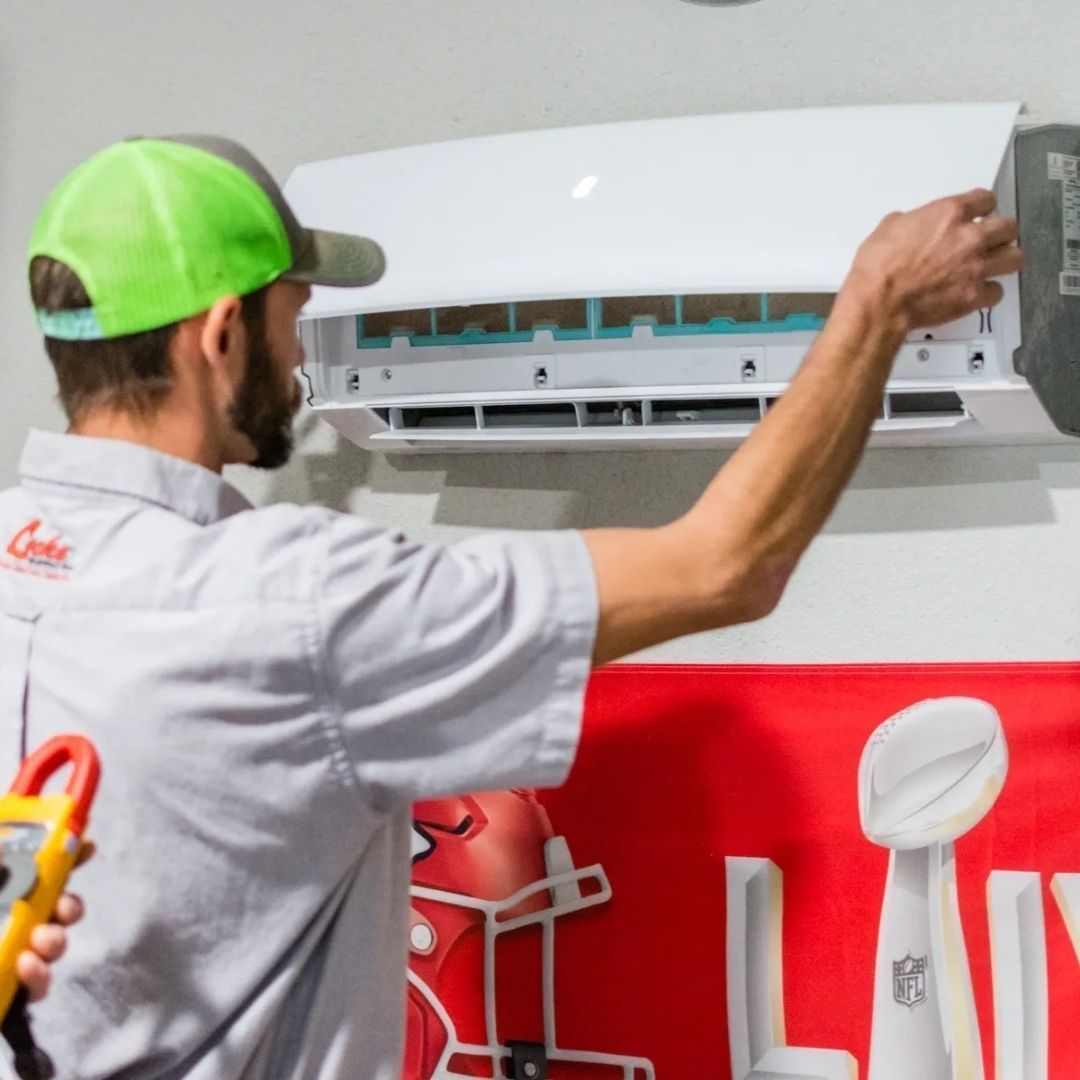
Older houses near the middle of the city have a problem the suburbs do not: there was never anywhere to put the ducts.
Redeemed HVAC & Plumbing covers central Springfield for heating repair, air conditioning repair, furnace installation, ductless systems, HVAC maintenance and plumbing. Open 24 hours, seven days. Call (417) 241-5687.
If you own one of those houses, you have probably been told the only answer is a large and disruptive project. Often it is not, and this page explains what the actual options are.
A central system needs two things the house has to supply: room for supply ducts to every space, and room for returns to bring the air back. Houses built before central air was standard were not designed around either, because the heat came from radiators, floor registers or a single gravity furnace and none of that needed a duct network.
So when central air gets added decades later, the ducts go wherever they will fit. Closets lose a corner. Soffits appear across ceilings. Runs thread through floor joists and take sharp turns they should not. The result works, after a fashion, and it carries three permanent penalties:
This is why putting a larger air conditioner into an older central house so rarely helps. A bigger coil needs MORE air, and air is exactly what the house cannot give it. The ceiling is set by the ducts.
A boiler and radiator system heats by circulating hot water through cast iron, which then radiates into the room. It is quiet, it does not blow dust around, and it produces a very even warmth because the iron holds heat and releases it slowly.
The common advice is to tear it out and put in a furnace so that ducts exist for air conditioning. Sometimes that is right. Frequently it is not, because:
The usual honest answer is to keep the heating that works and add cooling that does not need ducts. That means a ductless system, and it is the single most useful thing to know about an older house in this part of town.
A ductless system, often called a mini split, puts a small outdoor unit outside and one or more wall or ceiling heads inside, connected by a refrigerant line through a small hole rather than a duct. There is no duct system, so none of the duct penalties apply.
Why it suits these houses specifically:
The honest limitations, because every page that sells these leaves them out. The indoor heads are visible, and while they are much slimmer than they used to be they are not invisible. Each head needs a line route to the outdoor unit, so placement is a real constraint in a house with plaster walls. And a single head will not condition a whole floor through doorways, however the brochure reads; it conditions the space it can see.
This catches people in older houses, so it belongs in the quote rather than in a phone call on the day.
Modern equipment expects dedicated circuits and a panel with capacity to spare. An older house may have a panel that is full, or that has been extended more than once, and adding an outdoor unit plus an air handler can be the thing that tips it. Electric auxiliary heat is the heaviest draw of all.
So on any installation in an older central house, the right sequence is: look in the panel first, then choose equipment. Doing it the other way round is how a job stops halfway.
The same thinking applies to venting. A high-efficiency furnace needs a sidewall vent and a condensate drain. In a house with masonry walls and no good exterior face, that run can be the most awkward part of the whole project, and it needs deciding before the equipment is ordered, not after.
Our listing is open 24 hours, seven days, including holidays, and a technician answers rather than a service that takes a message.
Before a late call, rule out the quick ones. Thermostat batteries. The furnace switch and the breaker. The filter, because a blocked filter shuts a furnace down on a safety and reads as a dead furnace. On a boiler, check the pressure gauge and whether the circulator is running. On a high-efficiency furnace, check the condensate drain.
If it is none of those, call (417) 241-5687.
Can I add central air to an older house with no ductwork?
You can, but it is worth understanding what you get. The ducts have to go wherever they fit, which means soffits across ceilings and closet corners, and the result carries high resistance and usually too little return capacity. That caps how much cooling the equipment can actually deliver. In most older houses a ductless system gives better results with far less disruption, because it needs no ducts at all.
Should I replace my boiler and radiators with a furnace?
Often no. A sound boiler lasts a long time and radiators effectively do not wear out, and the heat they give is quiet and very even. Removing them does not produce a good duct system, it produces a retrofit duct system in a house that still has nowhere to run it. The usual better answer is to keep the heating that works and add cooling that does not need ducts.
How much of my house will one ductless head cool?
The space it can see, which is less than brochures imply. A head conditions its own room well and does not push conditioned air through doorways and around corners into other rooms. Plan one head per space you actually want controlled, and if budget is the constraint, stage it and start with the worst room rather than buying one unit and hoping.
Will my electrical panel handle a new system?
That has to be checked before equipment is chosen, not after. Modern systems expect dedicated circuits, and an older panel may already be full or extended more than once. Electric auxiliary heat is the heaviest load of all. Looking in the panel first is what stops a job stalling halfway through.
Are mini splits noisy or ugly?
The outdoor unit is quieter than a conventional air conditioner and the indoor heads are quiet enough to sleep next to. They are visible, though. Modern heads are much slimmer than older ones and there are ceiling cassette and low wall options, but anyone who tells you they disappear is overselling it. In exchange you keep your plaster and your ceilings.
Do you work on both the heating and the plumbing in older houses?
Yes, both out of the same business, which matters more in an older house than a newer one because the two are often tangled. A basement with a boiler, old supply pipe and a water heater at the end of its life is one visit rather than three companies.
In an older house the useful visit is the one that tells you what the building will and will not allow before anyone picks equipment: what the panel has spare, where a vent or a line set can actually run, and whether the existing heating is worth keeping.
Call (417) 241-5687, or start with our heating and cooling work across the city.
(417) 241-5687
Open 24 hours, 7 days a week, including holidays.
Two tune-ups a year on every system you own, 10% off all repairs and priority scheduling, from $14 a month.
Approved financing spreads the cost of a replacement, so the timing of the work is your decision rather than the equipment’s.
A heating or cooling problem leaves you guessing at both the cause and the price. The diagnosis comes with the readings behind it and the quote comes in writing, itemized, before any work starts. Call (417) 241-5687.