
(417) 241-5687 24/7 Emergency Service
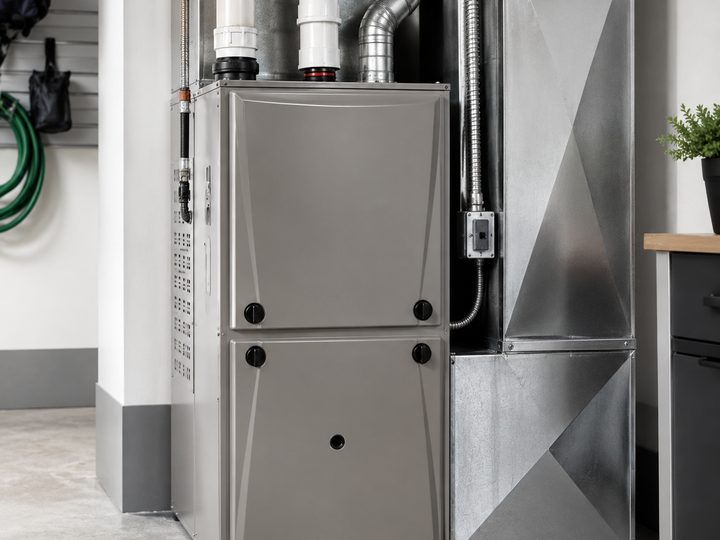
If your heating and cooling system is struggling in north Springfield, the problem is often not the part everybody blames. It is the ductwork it was bolted onto.
Homes north of downtown were built before central air was standard equipment. Many were built before this part of town was even part of Springfield. That history matters, because almost every HVAC system up here was added to a house that was not designed around one, and a system added later behaves differently from a system planned in.
Redeemed HVAC & Plumbing handles repair and installation across north Springfield, including furnace repair, air conditioning repair, HVAC maintenance, ductwork, thermostats, gas line work and emergency HVAC service. Call (417) 241-5687.
A retrofit duct system limits a new air conditioner because capacity is only half of what a system delivers. The other half is airflow, and a duct system threaded through closets, soffits and floor joists after the house was finished resists airflow far more than the equipment was designed for. When resistance climbs, the blower hits its limit, less air crosses the indoor coil, the coil runs colder than intended, and the system puts out less cooling than its label promises. Fitting a larger unit into those same ducts makes it worse, not better, because a bigger coil needs more air, not less. The ceiling on performance is set by the duct, so the duct is where a real fix starts.
Four things the duct system caps, no matter which brand goes outside:
This is the local detail that explains most of what we just described.
North Springfield was a separate incorporated city before it was absorbed into Springfield, and Commercial Street was its main street. The Commercial Street Historic District still runs between Washington and Grant, and the housing stock around Doling, Robberson, Woodland Heights and Tom Watkins went up in that era and the decades right after it.
Those houses were built for stoves, then for boilers and radiators, then for gravity furnaces with enormous ducts in the basement and nothing upstairs. Forced air arrived afterward, which means someone had to find a route for the supply and return in a building with no chase, no plenum space and plaster walls nobody wanted to open. The solutions were clever and they were compromises. Undersized trunk lines. Returns that serve a whole floor through one grille. Flex duct crushed where it turns a corner in an attic.
None of that shows up on an equipment quote. All of it shows up in how the house feels in August.
There is a measurable reason to take this seriously rather than treat it as an opinion.
On 1 January 2023 SEER2 and HSPF2 replaced SEER and HSPF as the efficiency test standard for US residential equipment, under a US Department of Energy test procedure change. The headline was the new numbers. The interesting part was why: the new procedure tests equipment against a higher external static pressure than the old one, because the industry acknowledged that installed ductwork in real houses resists airflow more than the old lab assumption allowed.
In other words, the standard moved toward the conditions in a north Springfield attic. A retrofit duct system in a house built before ducts existed can still run higher resistance than even the new test assumes. That is not a knock on the equipment. It is the reason the rating on the box and the comfort in the bedroom are two separate questions.
Static pressure is measured, not guessed. A technician puts a manometer across the air handler and reads the resistance the blower is actually fighting, then compares it against what that equipment is rated to handle.
It takes a few minutes and it changes the conversation completely. A system reading well above its rated static pressure is not underpowered. It is choked. At that point adding capacity is money spent making the choke worse, and the honest recommendation is duct work first.
The same visit should include a temperature split across the coil, blower amp draw and the refrigerant state. Those four readings together tell you whether you have an equipment problem, an airflow problem or a charge problem, and they are the difference between a diagnosis and a guess. Ask for the numbers. A technician who took them will have them.
Not every duct problem needs the house opened up. Plenty of static pressure gets recovered cheaply.
What cannot be fixed cheaply is a trunk line that is simply too small for the airflow a modern system needs, or a floor with no practical duct route at all. In those houses the right answer is sometimes a ducted system paired with zoning, and sometimes ductless heads for the rooms the ducts can never reach properly. Both are real solutions, and both beat buying a larger condenser and hoping.
Equipment size is the output of a calculation about your specific house, not a number copied off the old unit.
The residential standard is ACCA Manual J, which works room by room rather than treating the house as one box. Manual S then matches real equipment to that result and Manual D sizes the duct system that has to deliver it. One ton of cooling equals 12,000 BTU per hour, so a three ton system removes 36,000 BTU per hour under rated conditions, and whether your house needs that depends on insulation, window area and orientation, air leakage, ceiling height and where the ducts run.
Copying the nameplate from the unit being removed assumes the last installer was right and that nothing about the house has changed since. In a neighborhood where attics have been re-insulated and single-pane windows have been replaced, both assumptions are usually wrong in the same direction: the house now needs less than it used to, and installing the old size means installing an oversized system on purpose.
The work across this side of town covers the whole system, not just the box outside.
North Springfield covers a lot of ground, from the Kearney Street corridor and the neighborhoods either side of it, out past Dickerson Park Zoo and the Ozark Empire Fairgrounds, across to Doling Park and Giboney Cave, around Hillcrest High School and Greenlawn Cemetery, and up to the I-44 edge of the city. Broader heating and cooling work for the rest of the city is covered on the main Springfield heating and cooling services page.
Some failures wait until morning. Some do not.
A carbon monoxide alarm, or a gas smell, is not a comfort problem. Carbon monoxide is colorless and odorless, so there is nothing to detect by nose and nothing to confirm by waiting. Get everyone outside and call from outside. A cracked heat exchanger is the fault that lets combustion gases into the air moving through the house, and it is why a technician will condemn a furnace rather than patch it.
Water is the other one that does not wait. A frozen indoor coil thawing above a finished ceiling causes damage that costs more than the repair underneath it. Switch the system off at the thermostat and let it drain.
Everything else is a judgment call about comfort, and no heat on a freezing night with a young child or an older adult in the house counts. Emergency service runs 24 hours on (417) 241-5687.
My upstairs never cools. Do I need a bigger air conditioner?
Almost never. An upstairs that stays warm while the thermostat reads satisfied is an airflow and distribution symptom, and a larger unit distributes nothing. Measure static pressure and return area first.
Can an older north Springfield house get central air at all?
Yes, and there are usually three honest routes: a retrofit duct system, a ducted system with zoning, or ductless heads where no duct path exists. Which one fits depends on the house, not on a preference.
Is it worth replacing ductwork instead of equipment?
Sometimes it is the only change that helps. If static pressure is far above the equipment’s rating, new equipment inherits the same ceiling the old equipment hit.
How do I check that an HVAC contractor is licensed here?
Missouri does not license HVAC contractors at state level. Licensing sits with cities and counties, so ask which municipal license a company holds and confirm it covers the address where the work is happening. There is no single statewide registry to check.
Does a new filter really change anything?
It can change more than any other single item. A filter that restricts too much airflow lowers capacity and raises humidity, and it is one of the few HVAC problems a homeowner can cause and fix in the same afternoon.
Do you do commercial HVAC as well as residential?
Yes. Commercial HVAC and commercial repair are both part of the work, including rooftop units where access and run hours change the job.
Can you service a heat pump or a ductless mini split?
Yes. Ductless mini split heat pumps and mini split installation are listed services, and they are often the right answer in a house where no duct route exists.
Do you cover plumbing in the same visit?
Plumbing is handled by the same company, including water heaters, drains and gas line work. Call (417) 241-5687.
Whether it is a furnace that will not light, an air conditioner running without cooling, a tune-up before the season turns or a straight answer about whether your ducts can carry a new system, the starting point is a diagnosis with numbers attached rather than a quote with none.
Redeemed HVAC & Plumbing is a Rheem Pro Partner and offers maintenance agreements, financing and 24 hour emergency service. Call (417) 241-5687 to schedule, and ask for the static pressure reading while the technician is there. It is the number that explains the most and gets taken the least.
Heating, cooling and plumbing sit on the same service call in a lot of Springfield homes. These are the related pages a homeowner reading this one usually wants next.
Redeemed HVAC & Plumbing is an HVAC contractor serving Springfield, covering heating and cooling, air duct cleaning and plumbing. Residential and commercial HVAC work both run out of the same team, so a technician on site for an air conditioning repair can also look at the heating system, the ductwork, the thermostat and indoor air quality.
Emergency HVAC service runs 24 hours. Call (417) 241-5687.
(417) 241-5687
Open 24 hours, 7 days a week, including holidays.
Two tune-ups a year on every system you own, 10% off all repairs and priority scheduling, from $14 a month.
Approved financing spreads the cost of a replacement, so the timing of the work is your decision rather than the equipment’s.
A heating or cooling problem leaves you guessing at both the cause and the price. The diagnosis comes with the readings behind it and the quote comes in writing, itemized, before any work starts. Call (417) 241-5687.